B2B SaaS
Shipped
·
2025
Role
Product Designer, UX/UI
Team
PM, Tech Lead, 3–4 engineers
Timeline
2025
Company
Performance management platform
Signals
customer interviews
NPS responses analyzed
stages: contextual panel, then full profile
Competencies
Discovery & Research
Information Architecture
Complex B2B Workflows
Context
The company is a B2B SaaS performance management platform used by hundreds of companies across Brazil. The platform centralizes performance reviews, development plans, OKRs, feedback, and 1:1 meetings — but each of these lived in completely separate screens.
My role
I partnered with the PM on discovery, running the customer interviews and the card sorting sessions together, then explored and designed the solution in two stages. When the squad changed, I handed the project over and the squad’s new designer followed the delivery and made final adjustments.
Problem
Admins, managers, and employees had no way to get a complete picture of a person inside the platform. Performance reviews, development plans, feedback, and goals all lived in separate screens — forcing users to export spreadsheets manually and piece together information on their own.
The result: duplicated effort, slower decisions, and a platform that felt more like a filing cabinet than a management tool.


Discovery
Methods: Customer interviews · NPS survey · Product feedback analysis · Heatmap analysis · Usage dashboards
Volume: 90 customer interviews · 1,000+ NPS responses across 530 client companies · 270+ product feedback submissions focused on analytics and data usage
Key findings:
- Users frequently exported data manually to build their own views of employee performance
- Managers lacked contextual information during 1:1 meetings and performance conversations
- The platform's fragmented structure made it impossible to get a complete picture of any employee
- High demand for consolidated analytics was consistently present across feedback channels
What this told us:
The data wasn't missing — it was scattered. Users were doing the platform's job manually, piecing together information from multiple screens. The opportunity was clear: consolidate everything into one place, with tailored views per role.
How might we
How might we give managers, admins, and employees a complete, consolidated view of performance data — reducing manual effort and enabling better, faster decisions?
Solution
V1 — Contextual slide-over panel:
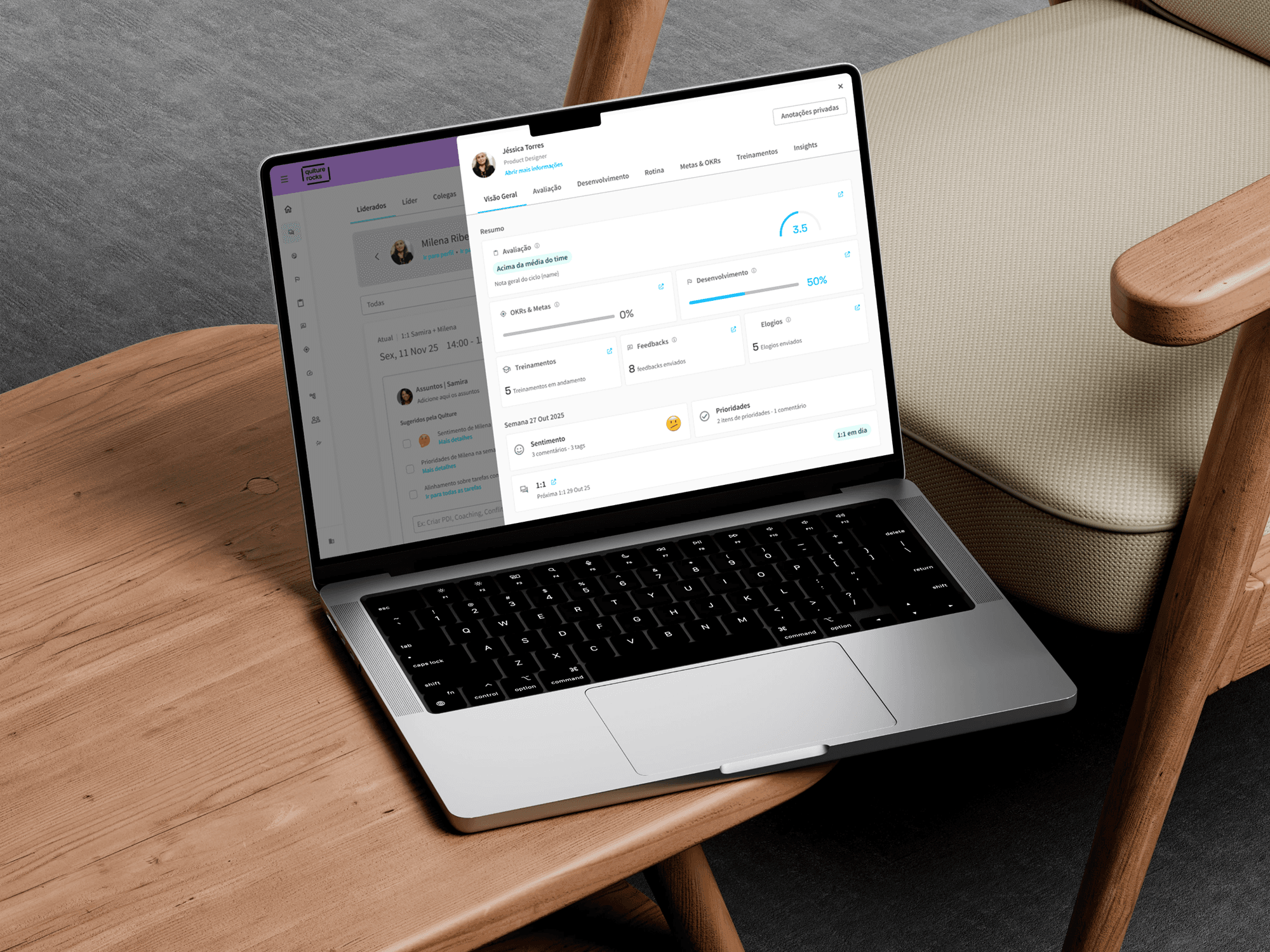
A slide-over panel accessible from multiple touchpoints across the platform, displaying key employee data for quick contextual reference: performance reviews, development plans, 1:1 history, and leadership insights, with tailored views per role.
V2 — Unified employee profile:
A dedicated profile page consolidating all existing surfaces across the platform, with new data points including OKRs, feedback, recognitions, weekly check-ins, and meeting notes. Prioritization was validated through a card sorting session with real users.
Key decisions
Two-stage release. V1 was a contextual slide-over panel reachable from several touchpoints, for quick reference. V2 was a dedicated profile page that consolidates everything and adds goals, feedback, recognitions, weekly check-ins and meeting notes.
Tailored views per role, so each person sees what’s relevant to them.
Card sorting with real users to decide what goes first on the profile.
Results
Both stages shipped. A baseline for profile access was established before launch; post-launch metrics were collected after I handed the project over.
The profile was a requirement for closing a significant customer contract, and delivering it helped close the deal.
What’s next
Next I’d measure profile access from 1:1s and reviews, and whether managers still export spreadsheets to prepare conversations.
